The food is the hero, not the interface
In this category the photography inside the frame is what makes someone hungry. Keep the surrounding composition warm and quiet so it frames the food rather than competing with it.
The restaurant made the meal. Your app removed the twenty minutes it used to take to get it. Galleries that understand that difference convert better than galleries full of beautiful dishes.
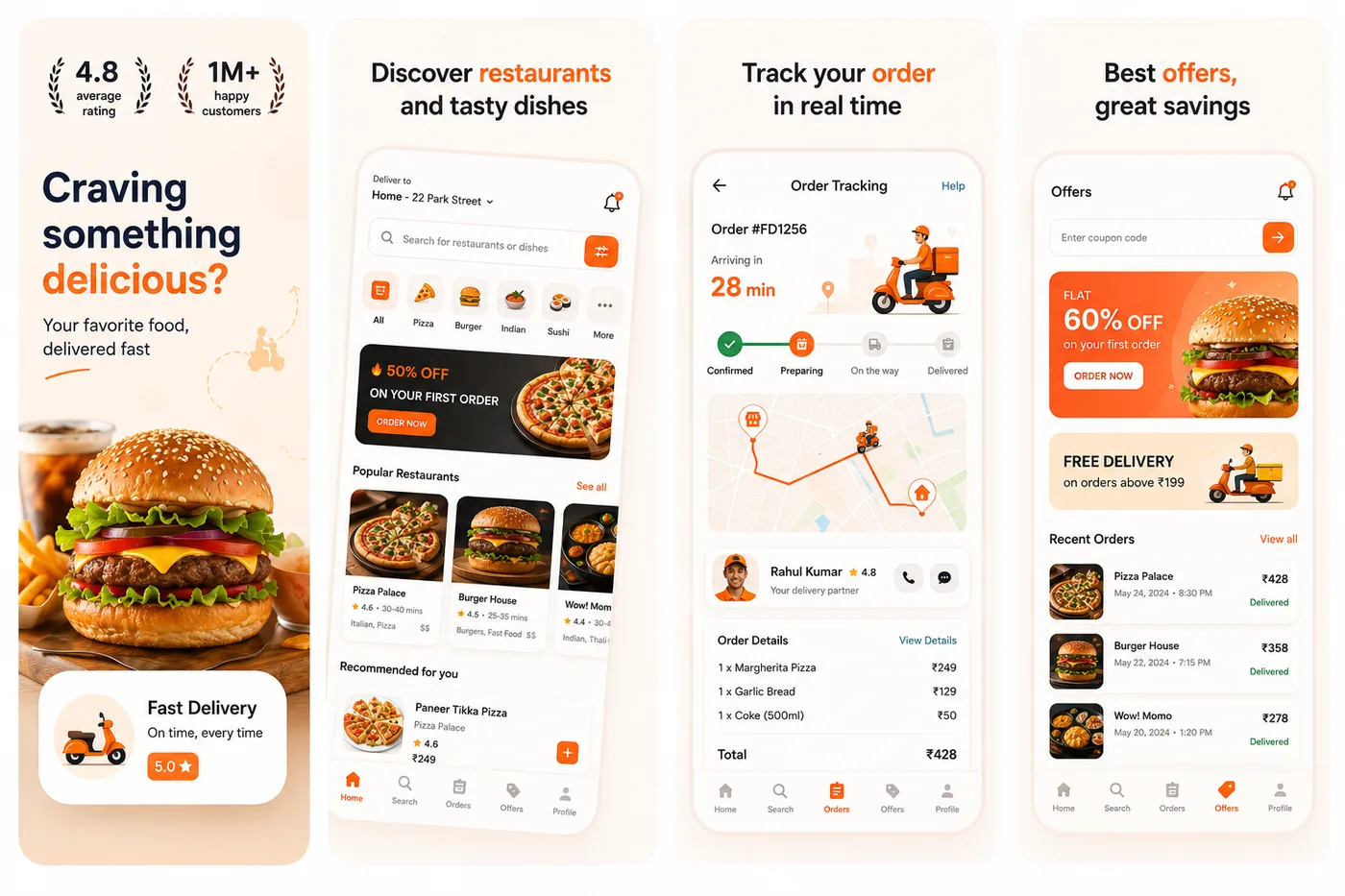
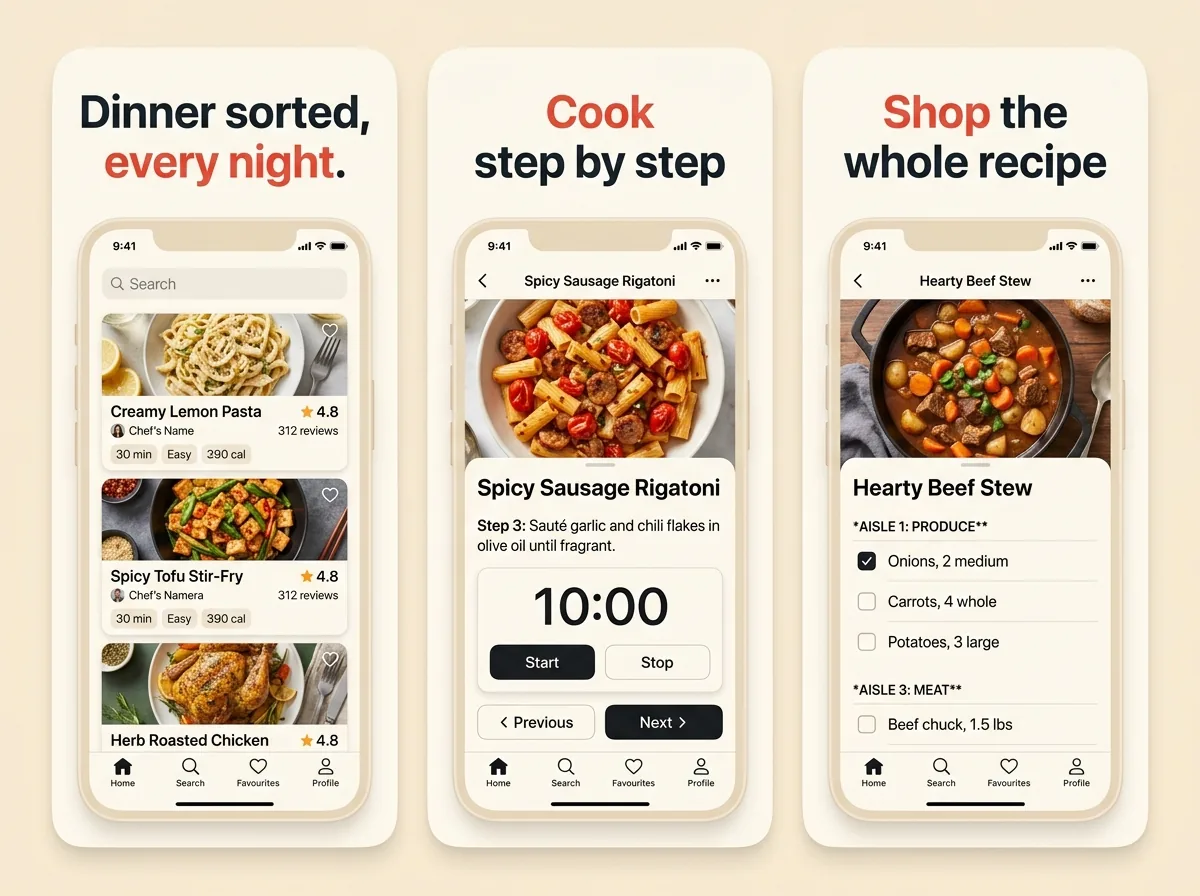
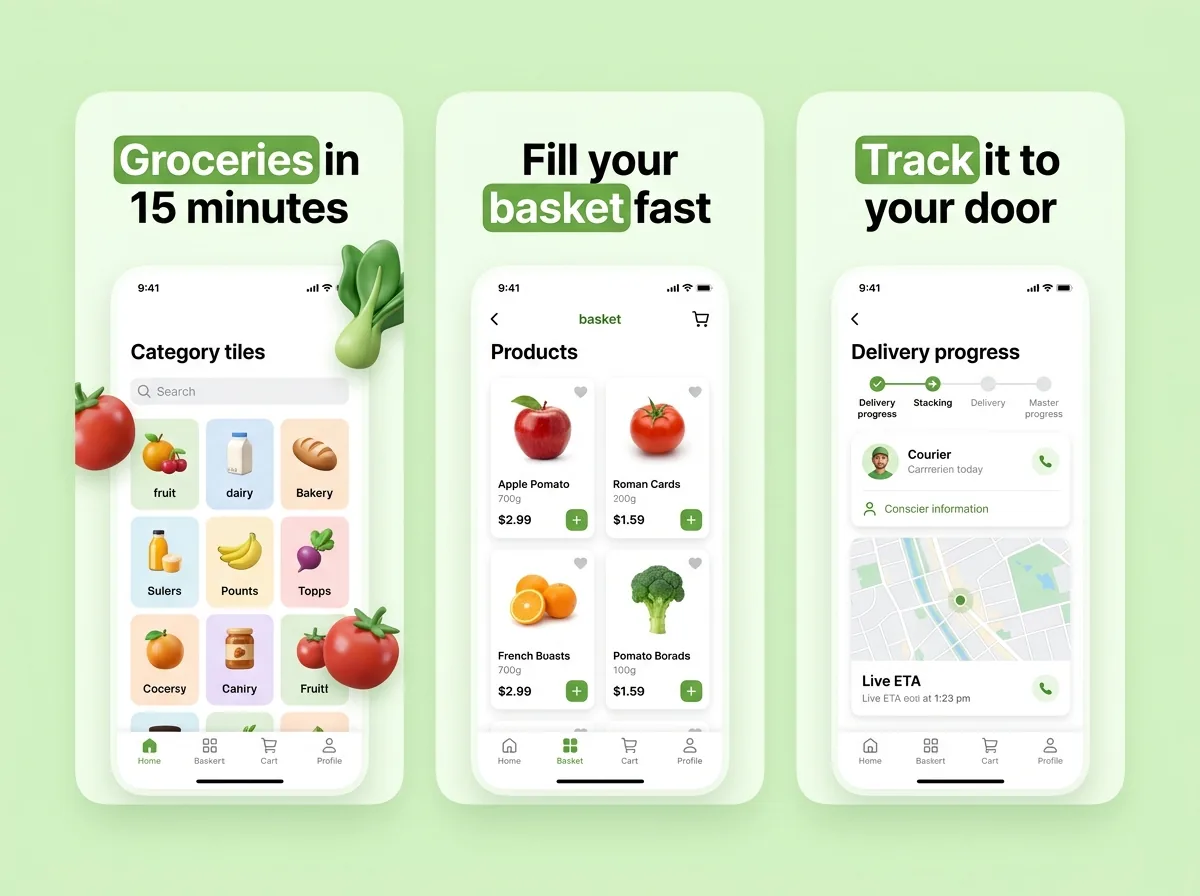
In this category the photography inside the frame is what makes someone hungry. Keep the surrounding composition warm and quiet so it frames the food rather than competing with it.
A single dish filling most of the screen reads at thumbnail size. A scrolling list of twelve restaurants at 150 px wide is a grey grid, no matter how good each individual photo is.
Delivery apps sell speed and convenience, not food — the food comes from the restaurant. "Delivered in 15 minutes" outperforms any dish photo as a headline, provided it is true where the person is standing.
The first question a browser has is "do you even deliver here". A frame showing local, recognisable merchants answers it faster than a map screen does.
A time or a fee shown in a screenshot is a claim that has to hold for the user seeing it. "Free delivery" that applies only above a threshold, or in one city, needs to say so.
Food is the one category where warm oranges, reds and creams are not a cliché but a functional signal — they read as appetising in a way cool blues actively do not.
They share a store category and almost nothing else about what the first frame should do.
Time, certainty and the removal of a decision. Not adjectives about flavour.
One dish, closely cropped, with a headline about time or convenience rather than about the food. The restaurant supplies the food; your app supplies the speed, and that is what the gallery should be selling.
If you have the right to use them, yes — recognisable local merchants answer "do you deliver here" faster than any map. Just make sure the brands shown are actually available in the storefront that sees that screenshot.
Only ones you can actually meet for the person seeing them. A time or a fee in a screenshot is a claim, and stores treat unmet promotional claims as a policy problem as well as a review magnet.
Per country, definitely — currency, cuisine and merchant recognition all differ. Per city is usually excessive, but a custom store listing on Google Play makes it possible for a market where it genuinely matters.
Different job entirely. Recipe apps sell competence — the finished dish first, then the guided step that makes it achievable. Ingredient lists and search screens are the weakest frames in a recipe gallery.
The first frame is a different job in every category. These two are the closest to this one.
Three free credits, no card. Upload a few screens and see the finished set before deciding any of this matters.
Generate a screenshot set